
WELCOME BONUS 300%
UP TO €2000 + 100
FREE SPINS
UP TO €2000 + 100
FREE SPINS
Home → Blackjack
Blackjack at Mummys Gold: Variants, Rules and Payouts
Infinite Blackjack uses the Six Card Charlie
Infinite Blackjack by Evolution allows unlimited players at a table with stakes ranging from 1 to 5,000 EUR. This variant features an RTP of 99.47%, which is slightly lower than the standard 99.56% seen in Lightning Blackjack. The high limit supports serious bankrolls without hitting mid-table restrictions common in other live dealer games.
The Six Card Charlie rule automatically wins if a player draws six cards without busting, effectively removing risk for late-stage hands. This rule improves the player's expected value compared to standard rules where a sixth card might bust the hand. Players relying on this strategy can extend their session length significantly beyond typical single-deck limitations.
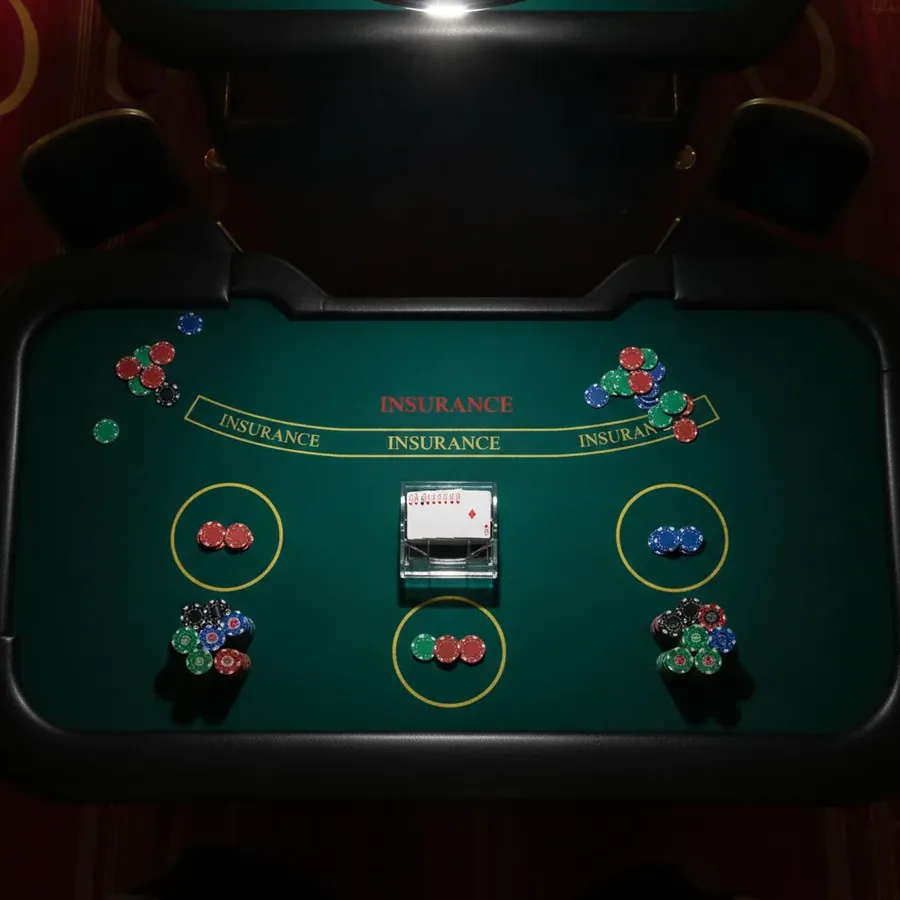
Double Down vs Simple Hit on 11
Basic strategy dictates doubling down on an 11 against most dealer upcards because the probability of drawing a ten-value card is highest. Doubling doubles the initial wager, meaning a 10 EUR bet becomes a 20 EUR risk for one additional card. This aggressive move yields a higher long-term return than simply hitting, which leaves potential winnings on the table.
Blackjack Party runs with two hosts
Blackjack Party by Evolution creates a lively atmosphere with two dedicated moderators managing the flow and interaction with players. Stakes range from 1.00 to 1,000 EUR, catering to casual participants who prefer a social environment over high-stakes tension. The dual-host format ensures constant engagement, making it distinct from silent or single-host tables found elsewhere.
Seat change at the Live Table in 20 seconds
Switching seats at an Infinite Blackjack table takes approximately 20 seconds, allowing players to find available spots quickly during peak hours. Since there are no seat limits, new entrants can join without waiting for others to leave their positions permanently. This efficiency minimizes downtime between rounds, keeping the gameplay pace consistent for those who value speed over deliberation.
Why Loss Progression Quickly Reaches Table Limit
Infinite Blackjack has a maximum bet cap of 5,000 EUR, which restricts aggressive Martingale strategies that double bets after losses. A player starting at 100 EUR and losing ten consecutive hands would need a 51,200 EUR wager, far exceeding the table limit. This hard ceiling prevents recovery through progression systems, forcing players to accept variance rather than chase losses indefinitely.
Blackjack variants at a glance
| Variant | Payout | House edge | Rule | Bet range |
|---|---|---|---|---|
| Blackjack Surrender (Late Surrender) – Regel-Effekt | n.a. (Regel-Modifikator) | −0.08 Prozentpunkte | Spieler gibt Hand nach Dealer-Blackjack-Prüfung auf, verliert die Hälfte des Einsatzes. Verbessert RTP um ca. 0.08 Prozentpunkte. Early Surrender ist wesentlich wertvoller (bis −0.6 Prozentpunkte), aber extrem selten. | Rückzahlung 50% des Einsatzes |
| Blackjack 6 Decks, S17, DAS, DOA, Auszahlung 3:2, Basisstrategie | 99.54% | 0.46% | Dealer steht auf Soft 17; Verdopplung auf jeder Zweierkarte; Verdopplung nach Split erlaubt; keine Aufgabe. Basisstrategie ist für diesen Wert zwingend | Blackjack 3:2, normaler Gewinn 1:1, Insurance 2:1 |
| Blackjack Ein Deck, klassische Regeln, 3:2 | 99.85% | 0.15% | Weniger Decks = niedrigerer Vorteil; ein Deck gibt ca. −0.48 Prozentpunkte gegenüber 8 Decks. Oft durch 6:5 Auszahlung kompensiert. | Blackjack 3:2, Gewinn 1:1 |
| Blackjack Split / Double / H17 – Regel-Effekte | n.a. (Regel-Modifikatoren) | H17 +0.22 Prozentpunkte; RSA −0.08 Prozentpunkte; DAS −0.14 Prozentpunkte | Dealer Hits Soft 17 verschlechtert RTP um 0.22 Prozentpunkte; Resplit Aces verbessert um 0.08 Prozentpunkte; Double After Split verbessert um ca. 0.14 Prozentpunkte; 6 Decks statt 8 – ca. 0.02 Prozentpunkte. | Double – Einsatz ×2 mit einer Karte; Split – bis 4 Hände; Ass-Split meist mit einer Karte. |
| Blackjack Liberal Vegas Strip (liberale Regeln, 3:2) | 99.72% | 0.28% | Günstigste Regelkombination: S17 + DAS + Resplit + Late Surrender. Standardabweichung 1,15 | Blackjack 3:2, Gewinn 1:1 |
| Blackjack Auszahlung 6:5 statt 3:2 (6 Decks) | 98.15% | 1.85% | Ersatz von 3:2 durch 6:5 fügt exakt +1.39 Prozentpunkte zum Vorteil des Casinos hinzu – stärker als jede andere Regeländerung. Bei $10 Einsatz zahlt Blackjack $12 statt $15. | Blackjack 6:5, Gewinn 1:1 |
Check table limit before the first bet
Infinite Blackjack from Evolution sets a maximum stake of 5,000 EUR, which is double the 2,500 EUR cap found at Lightning Blackjack. This higher ceiling allows players with larger bankrolls to wager significantly more per hand without hitting the house-imposed wall. Consequently, high rollers can utilize this specific table for their main betting strategy rather than being forced onto lower-limit alternatives.
The standard entry point for Infinite Blackjack begins at just 1 EUR, making it accessible for those testing basic strategy rules. This minimum aligns with the 1 EUR floor at Lightning Blackjack but contrasts sharply with the 1,000 EUR starting line at Blackjack Party. Players should verify these thresholds early to ensure their chosen game matches their intended session budget and risk tolerance.
Blackjack Party imposes a rigid range between 1,000 EUR and 1,000 EUR, effectively limiting participation to a single fixed stake level. Such a restrictive structure excludes casual players who wish to start with smaller wagers or adjust bets dynamically during play. The wide gap between the 1 EUR minimum and the 1,000 EUR party requirement highlights the importance of checking limits before depositing.
Ace Split: only one card per hand
The Liberal Vegas Strip variant permits Resplit Aces (RSA), which improves the player's RTP by approximately 0.08 percentage points compared to stricter rules. This rule allows a player to split aces multiple times if additional aces are drawn, creating up to four independent hands from a single pair. Such flexibility significantly reduces the house edge, bringing it down to a favorable 0.28% for skilled users.
Standard blackjack protocols often restrict ace splits to receiving only one additional card per new hand, preventing further doubling or splitting actions. While this limitation exists in many games, the liberal combination including DAS and Late Surrender offers a much stronger mathematical advantage. Players relying on perfect basic strategy must account for these specific restrictions when calculating long-term returns.
Early surrender remains extremely rare and typically unavailable at modern online tables, unlike late surrender which is permitted in the liberal variant. The absence of early surrender means players cannot forfeit half their bet before the dealer checks for blackjack, slightly increasing the casino's hold. Understanding these nuances helps beginners avoid costly mistakes when handling soft hands containing an ace.
Chose Wrong Table for 5 EUR Bankroll
A 5 EUR bankroll is insufficient for Lightning Blackjack, where the maximum bet reaches 2,500 EUR and variance is amplified by lightning multipliers. Attempting to survive such volatility with minimal funds leads to rapid depletion due to the high stakes required to chase significant payouts. Beginners should instead seek tables with lower maximum limits to extend their playing time and manage risk effectively.
Infinite Blackjack offers a more suitable environment for small bankrolls, as the minimum bet starts at 1 EUR and supports unlimited seats at the virtual table. This structure allows players to make multiple hands with their 5 EUR budget, providing ample opportunity to practice basic strategy without immediate ruin. The stable environment contrasts with the high-variance nature of the lightning-themed alternative.
Blackjack Party presents a barrier to entry with its 1,000 EUR minimum stake, completely excluding any player with a modest 5 EUR budget. This high threshold ensures that only whales participate, leaving small-stakes gamblers with no viable options within that specific game title. Selecting the correct table is crucial for maintaining engagement and avoiding premature account emptiness.
What Hole Card Means at a Live Table
Live dealer games like Infinite Blackjack operate under continuous shuffling or automated dealing procedures that eliminate the traditional hole card concept entirely. Unlike physical casinos where the dealer hides a second card until after player actions, live digital tables reveal all cards simultaneously or via sequential streaming. This transparency removes the uncertainty associated with peeking for blackjack, altering the strategic approach for experienced players.
The absence of a hole card changes the timing of decisions, particularly regarding insurance bets which are generally discouraged unless counting cards. In standard six-deck games, insurance carries a steep house edge of 7.47%, making it a poor choice for most statistical players. Understanding the mechanical differences between live and land-based formats prevents confusion over when and how to place secondary wagers.
Evolution's Infinite Blackjack utilizes a shoe configuration that deals cards continuously, ensuring no pause for card inspection or hidden reveals. This method maintains a fast pace but requires players to adapt to real-time information availability without the safety net of a concealed dealer card. Beginners should focus on basic strategy charts optimized for these transparent dealing conditions to minimize errors.
Place Side Bet before cards are dealt
Infinite Blackjack features four distinct side bets including Any Pair, 21+3, Hot 3, and Bust It, which must be placed prior to the initial deal. These supplementary wagers add excitement but carry significantly higher house edges compared to the main game's 99.47% RTP. Players interested in extra payouts should allocate a separate portion of their bankroll specifically for these ancillary opportunities.
Lightning Blackjack incorporates lightning multipliers that can boost winnings up to 25x, but these apply only to the main hand result rather than side bets. The primary focus remains on achieving a winning hand against the dealer, with the multiplier acting as a random enhancer rather than a guaranteed feature. Side bets in this context are less relevant compared to the potential for massive main-game payouts.
Blackjack Party focuses on atmosphere and moderation rather than complex side bet structures, offering a simpler betting experience for social players. Without the distraction of multiple auxiliary wagers, participants can concentrate on the core gameplay and interaction with the two hosts. This streamlined approach suits beginners who prefer straightforward rules over intricate betting markets.
Perfect Pairs vs 21+3 in House Edge
The 21+3 side bet in Infinite Blackjack carries a house edge of 5.84% (derived from its 94.16% RTP). This cost is significantly higher than the base game’s 0.46% edge, making it an expensive proposition for long-term play. Players betting €10 per hand lose approximately €0.58 on average with each side wager placed.
In contrast, Perfect Pairs relies on matching card ranks rather than suit combinations to trigger payouts. The absence of detailed statistics makes precise comparison difficult without external data.
Side bets contribute 10% toward the bonus wagering requirement, unlike slots which count 100%. This restriction slows down the conversion of bonus funds into withdrawable cash when playing these tables. The limited contribution rate effectively doubles the required turnover compared to slot play.
What Push Means: Stake Returns to You
A push occurs when the player and dealer hands tie, resulting in the original stake being returned without profit or loss. In standard Blackjack variants, this outcome preserves the bankroll during neutral rounds. The player retains their full bet amount, avoiding any negative variance from that specific hand.
Insurance bets pay 2:1 but carry a house edge of 7.47%, far worse than the base game. This high edge stems from the probability of the dealer having a ten-value card. Accepting insurance during a push scenario is mathematically unfavorable for most players.
Late surrender allows players to forfeit half their bet after the dealer checks for blackjack. This rule reduces the house edge by 0.08 percentage points, offering a partial exit strategy. Using this option wisely can mitigate losses on weak hands against strong dealer upcards.
Bust at 22: Stake Lost Immediately
Standard Blackjack rules require immediate bust if the hand total exceeds 21, losing the entire stake. Some live variants like Lightning Blackjack introduce unique multipliers up to 25x on winning hands. These features add volatility but do not alter the fundamental bust mechanic of going over 21.
Dealer rules vary, with Soft 17 hitting increasing the house edge by 0.22 percentage points. Standing on Soft 17 improves player odds by the same margin. Understanding these dealer behaviors is crucial for applying correct basic strategy across different table limits.
Resplitting Aces improves the Return to Player by 0.08 percentage points compared to single-card restrictions. Allowing double after split adds another 0.14 percentage points to player advantage. These liberal rules make certain Vegas Strip variants more favorable for beginners.
Register Late Surrender correctly in three steps
Step one involves identifying hands totaling 15 or 16 against dealer upcards of 10 or Ace. Late surrender is only available after the dealer has checked for blackjack. This timing ensures players do not lose half their bet when the dealer already holds a natural twenty-one.
Step two requires calculating the expected value of surrendering versus playing out the hand. With a hard 16 against a dealer 10, surrendering loses 50% immediately, often better than the ~54% loss rate from playing. This mathematical advantage justifies the action in strict strategy charts.
Step three entails executing the surrender command before drawing additional cards. The payout returns 50% of the original wager, preserving half the bankroll. This rule reduces the overall house edge by 0.08 percentage points when used optimally.
Surrender vs Playing Out on 16 vs 10
Holding a hard 16 against a dealer 10 presents one of the worst starting positions in blackjack. Playing out this hand results in a win probability of roughly 46%, meaning players lose more than half the time. The expected loss from continuing play exceeds the immediate 50% penalty of surrender.
Late surrender offers a decisive exit, returning 50% of the stake to minimize further damage. This rule reduces the house edge by 0.08 percentage points when applied correctly to marginal hands. It provides a statistical safety net that pure basic strategy cannot offer without this option.
Insurance bets remain distinct from surrender decisions, carrying a 7.47% house edge. They should generally be declined unless counting cards indicates a true count of +3 or higher. Confusing these mechanics leads to suboptimal financial outcomes at the table.
Contact
Live - online chat
Banking









Providers












Mummys Gold Casino 2026